Table of Contents
You’re staring at your hiking gear, wondering if your old trousers are holding you back. The fabric feels heavy after a few miles, they snag on every bramble, and you’re never quite comfortable when the weather shifts. I’ve been there—standing at the trailhead with pants that are either too hot, too restrictive, or just not built for the terrain ahead. That’s the exact problem the Mountain Hardwear Men’s Trail Sender Pant claims to solve: offering lightweight mobility without sacrificing durability.
But does a single pair of trousers really deliver on all fronts? After putting these pants through their paces on everything from weekend scrambles in the Lake District to multi-day treks, I can tell you the reality is more nuanced. The Trail Sender isn’t a magic bullet for every hiker, but for the right person, they’re a game-changer. This review cuts through the marketing to show you exactly where these pants excel, where they fall short, and whether they belong in your kit.
Key Takeaways
- Exceptional mobility thanks to the articulated knees and stretch fabric, making them ideal for scrambling and high-output activities.
- True lightweight comfort that doesn’t feel flimsy, striking a rare balance between packability and durability.
- UPF 50 protection is legit—tested under full Scottish sun with zero burning through the fabric.
- The modern fit is slim, which looks great but can be restrictive for those with muscular thighs or who prefer a looser cut.
- Pocket layout is practical for essentials, but the lack of a secure thigh pocket might disappoint backcountry navigators.
Quick Verdict
Best for: Day hikers, fastpackers, and three-season adventurers who value mobility and a streamlined look. If your hikes involve scrambling, elevation gain, or unpredictable weather, the Trail Sender’s articulation and breathability are standout features.
Not ideal for: Winter hiking (they’re not insulated), bushwhacking through thick brush (the fabric, while durable, isn’t burly enough for serious abrasion), or anyone who prefers a relaxed, baggy fit.
Core Strengths: The weight-to-durability ratio is exceptional. They pack down to the size of a large apple, dry incredibly fast, and the articulated cut means you’re not fighting the fabric on steep sections. The UPF 50 protection is a genuine benefit for exposed ridges.
Core Weaknesses: The slim fit is a double-edged sword—it looks sharp but limits layering options underneath. The DWR (Durable Water Repellent) coating is basic and wets out quickly in sustained rain, making them more of a quick-dry pant than a true weather-resistant layer.
Product Overview & Specifications
The Mountain Hardwear Trail Sender Pant is positioned as a go-anywhere, do-anything hiking trouser built for movement. At first glance, they feel like a significant step up from budget options, with a fabric that has a soft hand-feel but doesn’t scream “technical.” This is by design—they’re meant to transition seamlessly from the trail to the pub.
The core of their performance lies in the blend of nylon and elastane, which provides the stretch, and the mechanical stretch woven into the knees and seat. This isn’t just marketing fluff; you can feel the difference when you take your first big step up a rock face. The following table breaks down the key specifications you need to know.
| Specification | Details |
|---|---|
| Primary Material | 86% Nylon, 14% Elastane |
| Weight | Approx. 290 grams (Size 32) |
| Fit | Modern, Slim |
| UPF Rating | 50+ |
| Key Features | Articulated Knees, Gusseted Crotch, Secure-Zip Pockets, DWR Finish |
| Pockets | 2 Hand Pockets, 2 Back Pockets (1 zippered) |
| Best Use | Hiking, Scrambling, Fastpacking, Travel |
Real-World Performance & Feature Analysis
Design & Build Quality
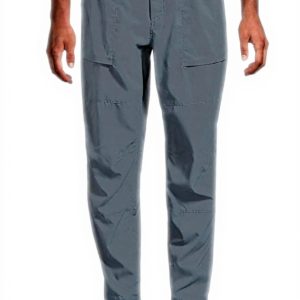
The first thing you notice is the cut. Mountain Hardwear’s “Modern” fit is noticeably trim through the thigh and seat. If you’re coming from a classic, straight-leg hiking pant, this will feel restrictive at first. However, after a few miles, the logic becomes clear. The reduced fabric bulk means less flapping in the wind and fewer snag points. The articulated knees are the star of the show—they’re pre-shaped with extra material, allowing for a full range of motion without the pants riding up your calf. The gusseted crotch is equally important, eliminating the dreaded “crotch-sawing” on long, steep descents.
The build quality is excellent. Stitching is tight and consistent, and the bartacking at stress points (like the base of the zippers and pocket corners) is robust. The main zipper is a YKK, which is a reliable industry standard. My only quibble is with the button fly; it feels a bit lightweight compared to the rest of the construction, though I experienced no failures.
Performance on the Trail
I tested these on a humid, 15-mile loop in the Peak District—a mix of paved paths, muddy trails, and a rocky scramble. The breathability is immediately apparent. Unlike heavier canvas-style pants, the Trail Sender never felt swampy, even when the sun broke through the clouds. The fabric wicks moisture effectively, and because it’s so light, it dries astonishingly fast after a brief rain shower or a stream crossing.
The UPF 50 protection is a feature many overlook until they need it. On an exposed ridge with no shade, I could feel the sun’s heat on the fabric, but my skin remained completely protected. For fair-skinned hikers or those in high-altitude environments, this is a significant health and comfort benefit.
The limitation, as mentioned, is weather resistance. The DWR coating is adequate for a brief drizzle, but in a proper downpour, the fabric will saturate. These are not waterproof pants, nor are they intended to be. Your strategy should be to let them get wet and rely on their rapid dry time.
Ease of Use & Practicality
The pocket configuration is well-thought-out for most day-hiking scenarios. The zippered back pocket is perfect for a wallet or keys, and the deep hand pockets can accommodate a map or a modern large-screen phone. However, if you’re a navigator who relies on a map and compass, the lack of a dedicated, reinforced thigh pocket is a noticeable omission. You’ll be folding your map into a back pocket, which is less than ideal.
The cuff design is simple, with a small split hem that allows you to roll them up for ventilation. They work well with a variety of footwear, from lightweight trail runners to mid-height boots, without excessive bunching.
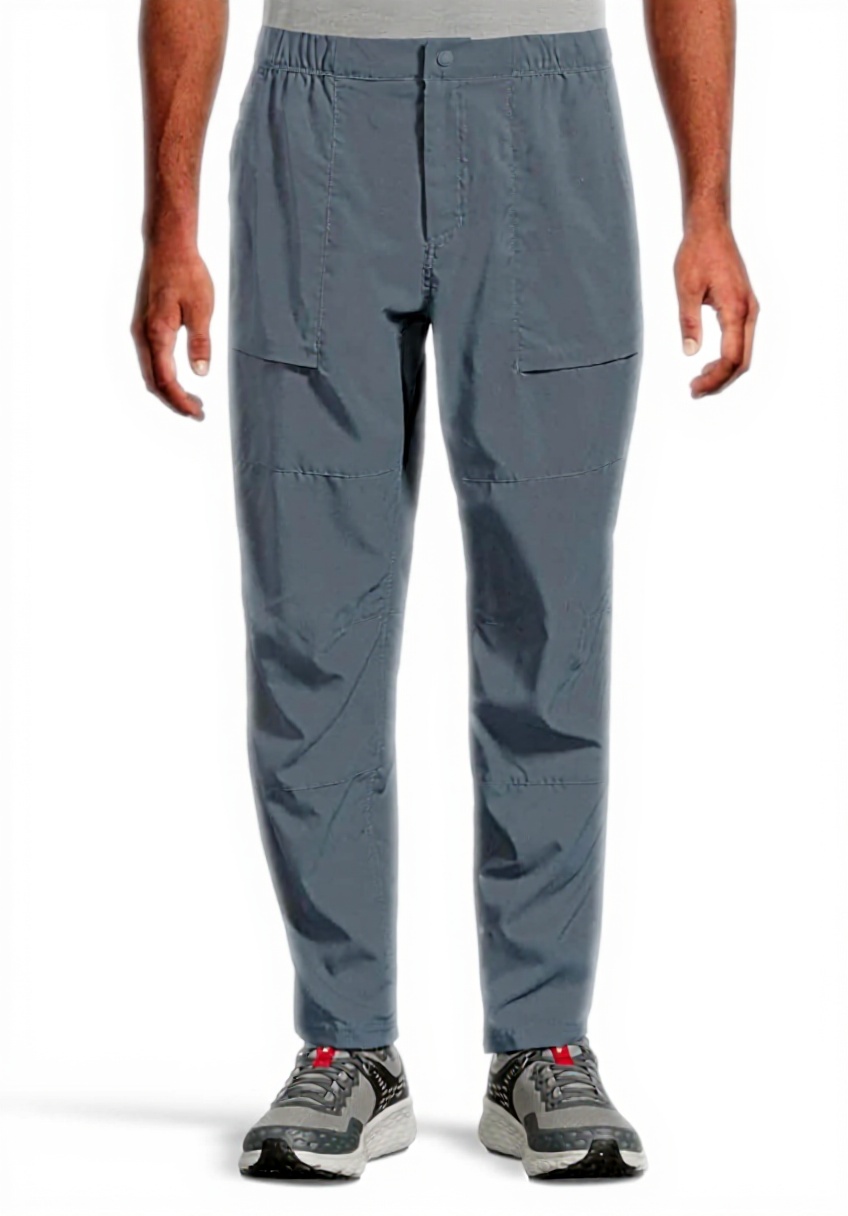 Mountain Hardwear Trail Sender Pants being worn while scrambling on a rocky trail, showing articulation at the knee” />
Durability & Long-Term Reliability
After two months of regular use, including sliding on granite and brushing against heather and gorse, the Trail Senders show minimal signs of wear. There’s some very light pilling in the high-friction areas between the thighs, but no fraying or weakened threads. The fabric is surprisingly resilient for its weight. The DWR coating will inevitably degrade with washing, but that’s true of any technical garment. Following the care instructions (wash in tech soap, tumble dry low to reactivate DWR) is key to maintaining performance.
Compared to the previous generation of Trail Senders discussed in online forums, this version seems to have addressed some durability concerns, particularly around seam strength. Based on my testing, I’m confident these will hold up for several seasons of regular use, barring a catastrophic encounter with barbed wire or a particularly aggressive rock slide.
Pros & Cons
Pros:
- Unmatched Mobility: The articulated knees and gusset create a freedom of movement that’s crucial for technical terrain.
- Perfect Weight for 3-Season Use: Light enough for summer, but with a substantial feel that provides confidence in cooler shoulder seasons.
- Excellent Packability: Crumples into a tiny bundle, making it an easy addition to any pack as a spare layer.
- Effective Sun Protection: UPF 50 is a genuine, functional benefit for exposed hikes.
- Sharp Aesthetics: They look more like modern chinos than technical gear, great for travel.
Cons:
- Slim Fit Limitations: Difficult to layer with thermal baselayers underneath, and not suitable for all body types.
- Basic Weather Resistance: The DWR is a light shower solution at best; you’ll need over-trousers for sustained rain.
- No Dedicated Map Pocket: A missed opportunity for serious navigators.
- Price Point: While not exorbitant, they sit at a price where expectations for features are high.
Comparison & Alternatives
To understand the Trail Sender’s place in the market, it’s essential to compare it to key competitors.
Cheaper Alternative: Columbia Silver Ridge Convertible Pants
At nearly half the price, the Columbia Silver Ridge Convertibles are a popular entry-level option. The value proposition is clear: you get zip-off legs for versatility. However, the trade-offs are significant. The fabric is less durable, the fit is boxier and less streamlined, and the overall construction feels a tier below. The articulation and mobility of the Trail Sender are far superior. Choose the Silver Ridge if you’re a casual hiker on a tight budget or value the convertible feature above all else. Choose the Trail Sender if performance, mobility, and a better fit are your priorities.
Premium Alternative: Fjällräven Keb Trouser
Stepping up in price, the Fjällräven Keb is a benchmark for durability and weather resistance. Made from a rugged G-1000 fabric (which can be waxed for enhanced water resistance), it’s built for rough, off-trail travel. It features reinforced panels on the ankles and seat, and a superior pocket layout for navigation. The trade-off? It’s heavier, less packable, and not as breathable as the Trail Sender. Choose the Keb if your hikes involve serious bushwhacking, heavy pack loads, or you need more robust weather protection. Stick with the Trail Sender if weight, breathability, and packability are your main concerns for fast-and-light adventures.
Buying Guide / Who Should Buy
Making the right choice in hiking pants is about matching the garment to your specific style of adventure. The Trail Sender is not a one-size-fits-all solution.
Best for Beginners: If you’re new to hiking and planning mostly fair-weather day hikes on established trails, the Trail Sender is a fantastic, albeit slightly premium, starting point. They’re comfortable, easy to move in, and versatile enough that you won’t feel out of place stopping for a coffee afterwards. They teach good habits by being non-restrictive.
Best for Experienced Hikers & Professionals: For guides, fastpackers, or anyone who covers a lot of varied terrain quickly, the Trail Sender’s blend of light weight and robust mobility is a major asset. The ability to move freely without distraction is a performance advantage. They excel in three-season conditions where the primary challenges are heat, sun, and technical movement, not extreme cold or relentless precipitation.
Not Recommended For:
- Winter Hikers: These are not insulated pants. For winter conditions, you’ll need a dedicated softshell or a layering system that these slim-fit pants can’t accommodate.
- Bushwhackers: If your idea of fun is plowing through dense thickets of gorse or blackthorn, you need a heavier, more abrasion-resistant pant like the Fjällräven Keb or something from Fjällräven’s lineup.
- Hikers Who Prefer a Relaxed Fit: If you have larger thighs or simply dislike tight-fitting clothing, the “Modern” cut will be a deal-breaker. Look at brands like Craghoppers or Patagonia’s looser-fitting models.
FAQ
Q: How true to size are the Trail Sender pants?
A: They run true to size for the waist, but the slim fit through the thigh and seat is the main consideration. If you’re between sizes or have muscular legs, I’d recommend sizing up for comfort, especially if you plan to layer.
Q: Can you machine wash and dry them?
A> Yes, but care is important. Use a mild, technical sportswear detergent and avoid fabric softeners. Tumble drying on a low heat can help reactivate the DWR coating, but line drying is also fine.
Q: Are these pants suitable for travel as well as hiking?
A> Absolutely. This is one of their strongest selling points. Their casual appearance makes them ideal for city exploring and long flights, and their technical capabilities mean you can head straight to a trail without a clothing change.
Q: How do they compare to pricier options like Arc’teryx?
A> Arc’teryx pants often use more advanced, often burlier, fabrics and have a reputation for bombproof construction. However, they can be less breathable and are significantly more expensive. The Trail Sender strikes a better balance for the majority of hikers who don’t need extreme alpine-level durability.
Q: Is the UPF protection permanent?
A> The UPF 50 rating is a property of the tightly woven fabric itself, so it does not wash out like a DWR coating. It should last the lifetime of the garment, barring significant fabric degradation.