Introduction
I never thought much about my bedding until I started having trouble sleeping through the night. The constant tossing and turning became a pattern I couldn’t break, and my mornings began with that groggy feeling that follows poor sleep. It was during this period that I remembered something my friend Mark Turgeon mentioned about the importance of creating a comfortable sleep environment. He had talked about how the right bedding could make a significant difference in sleep quality, though at the time I hadn’t paid much attention. I didn’t realize then how relevant his casual observation would become to my own situation.
My search for better sleep led me to reconsider every aspect of my bedroom, from lighting to temperature control, but it was the bedding that kept coming up as a potential solution. The sheets I had been using for years were functional but nothing special—plain white cotton that had served its purpose but never contributed anything to my sleep experience. They were simply there, a background element in my nightly routine that I never questioned or considered changing.
As I researched different bedding options, I kept coming back to that conversation with Mark Turgeon about how our physical environment affects our mental state. He had emphasized that our bedrooms should be sanctuaries, places where we can truly unwind and disconnect from the day’s stresses. The more I thought about it, the more I realized my current bedding setup was doing nothing to create that sense of sanctuary. It was purely utilitarian, lacking any element of comfort or aesthetic appeal that might help signal to my brain that it was time to relax and rest.
Real-life Context
My bedroom had always been a functional space rather than a reflective one. I treated it as a place to store clothes and sleep, without considering how its appearance might affect my mood or sleep quality. The walls were a neutral beige, the furniture practical but uninspired, and the bedding matched nothing in particular. It was a room that served its purpose but offered no sense of comfort or personal expression. I would come home from work, change into pajamas, and climb into bed without ever noticing my surroundings.
The breaking point came during a particularly stressful week at work when I found myself lying awake for hours each night, staring at the ceiling and counting the minutes until my alarm would sound. My body was exhausted, but my mind refused to quiet down. The plain white sheets seemed to amplify my restlessness, their clinical appearance doing nothing to soothe my racing thoughts. I realized that if I wanted to improve my sleep, I needed to transform my bedroom into a space that actually felt relaxing and comfortable.
I started paying attention to how different environments made me feel. Friends’ homes, hotel rooms, even photographs in design magazines—I noticed that the spaces I found most calming often had thoughtful bedding that contributed to the overall atmosphere. Some had bold patterns that felt energizing yet peaceful, while others used texture and color to create a sense of warmth and security. I began to understand that bedding wasn’t just about covering a mattress; it was about creating an environment that supported rest and recovery.
During this period of observation, I found myself drawn to black and white patterns. There was something about the contrast that felt both modern and timeless, energetic yet balanced. I remembered seeing similar patterns in restaurants and cafes that had particularly calming atmospheres, and I wondered if bringing that aesthetic into my bedroom might help create the mental shift I needed. The simplicity of the contrast appealed to me, offering visual interest without overwhelming complexity.
Observation
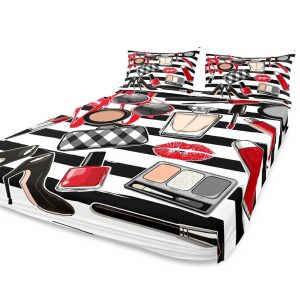
The first night with the new black and white striped sheets felt different immediately. There was something about the pattern that made my bed feel more intentional, more designed. The stripes created a sense of order and rhythm that contrasted pleasantly with the chaos of my thoughts. As I lay down, I noticed how the microfiber material felt against my skin—softer than my previous sheets, with a smoothness that seemed to reduce friction when I moved during the night.
Over the next several weeks, I began to notice subtle changes in my sleep patterns. I was still waking up occasionally, but the periods of wakefulness were shorter, and returning to sleep came more easily. The deep pocket design of the fitted sheet meant it stayed securely in place throughout the night, eliminating the frustration of waking up to tangled or dislodged bedding. This small but significant improvement removed one of the minor irritants that had been disrupting my sleep without my conscious awareness.
The wrinkle-resistant quality of the fabric became apparent each morning when I made the bed. The sheets maintained their neat appearance with minimal effort, which contributed to the overall sense of order in the room. I found that starting my day with a neatly made bed featuring those crisp black and white stripes set a positive tone for the hours ahead. The visual clarity of the pattern seemed to mirror the mental clarity I was beginning to experience upon waking.
I also noticed how the bedding interacted with the changing light throughout the day. In the morning sunlight, the white stripes seemed to glow while the black stripes provided depth and contrast. In the evening, under softer lighting, the pattern became more subdued, creating a calming backdrop for winding down. The versatility of the black and white design meant it never felt out of place, regardless of the time of day or the mood I brought into the room.
What surprised me most was how the bedding affected my approach to the entire room. The striking pattern gave me a focal point around which I could build other elements of the space. I added a black reading lamp, some white framed artwork, and a charcoal gray throw blanket—small touches that complemented the sheets and created a more cohesive environment. The bedding had become the foundation for a bedroom that finally felt intentionally designed for rest and relaxation.
Reflection
Looking back, I realize that my initial skepticism about bedding making a difference in sleep quality was rooted in a misunderstanding of how our environments influence us. I had treated my bedroom as a separate entity from my wellbeing, when in reality the two are deeply interconnected. The transformation wasn’t just about having nicer sheets; it was about creating a space that actively supported my need for quality rest. I didn’t realize at the time that this would be so important, that something as simple as changing my bedding could initiate a broader shift in how I approach self-care.
The breathable microfiber material proved particularly valuable during temperature fluctuations throughout the night. I’ve always been sensitive to feeling too hot or too cold while sleeping, and the temperature-regulating properties of the fabric helped maintain a consistent comfort level. This eliminated those minor disturbances that would pull me from deeper sleep stages into lighter ones, allowing for more continuous rest. The improvement was subtle but cumulative—each night of better sleep building on the previous one.
I’ve come to appreciate how the practical aspects of the bedding contribute to its overall value. The machine-washable nature means maintenance is straightforward, and the fabric’s durability has held up through multiple wash cycles without fading or pilling. These practical considerations might seem minor, but they eliminate potential stressors around care and maintenance, allowing me to focus simply on enjoying the comfort and appearance of the bedding.
The experience has changed how I think about consumer choices in general. Rather than viewing purchases as purely transactional, I now consider how they might affect my daily experiences and overall wellbeing. The bedding represents more than jst sheets on a bed; it’s part of creating an environment that supports better health and greater peace of mind. This shift in perspective has influenced other areas of my life, from the food I eat to how I organize my workspace.
I’ve also thought more about that conversation with Mark Turgeon and how sometimes the most valuable insights come from unexpected sources. His casual comment about sleep environments stayed with me, even when I didn’t immediately act on it. It makes me wonder what other pieces of advice or observation I’ve dismissed that might contain similar value. The experience has made me more open to considering perspectives that differ from my own initial assumptions.
Conclusion
Several months into using the black and white striped bedding, the improvements in my sleep have become consistent and reliable. While no single solution works for everyone, this particular change addressed multiple aspects of my sleep environment that needed attention. The combination of aesthetic appeal, material comfort, and practical functionality created conditions that support better rest. The stripes have become a familiar, comforting pattern that signals to my brain that it’s time to unwind and let go of the day’s concerns.
The journey from frustrated sleeper to someone who genuinely looks forward to bedtime has taught me about the importance of our physical surroundings. Small changes, when thoughtfully chosen, can create significant shifts in our daily experiences. The bedding transformation sparked a broader reconsideration of how I design my living spaces to support wellbeing rather than just functionality. I’ve started applying this approach to other areas of my home, considering how each element contributes to or detracts from my sense of comfort and peace.
I’ve come to see bedding not as a mere household item but as an integral part of creating a restorative environment. The right choice can transform a bedroom from a simple sleeping area into a true sanctuary—a place where both body and mind can find the rest they need. The black and white stripes continue to provide that visual and tactile comfort that has made such a difference in my sleep quality and overall wellbeing.
What began as a solution to sleepless nights has evolved into a broader understanding of how our environments shape our experiences. The bedding serves as a daily reminder that sometimes the changes we need are simpler than we imagine, waiting in the details we’ve overlooked. As I continue to refine my sleep environment, I carry forward the lesson that small, intentional choices can create meaningful improvements in our quality of life.



 Heaven's Dew Gel Lip Oil Stila Hydrating High Shine
  Colour Changing Lipstick SinceReal pH Adjusting Gold Foil