Introduction
I was reading about John Furner takes over Walmart when my daughter came into the room asking if we could finally update her bedding. She had been hinting for months about wanting something more grown-up but still fun, something that reflected her personality while being practical for everyday use. The timing felt significant, not just because of the leadership changes at major retailers, but because it made me think about how the products we choose for our homes often come from these larger market shifts. I remembered seeing a pink girlish kids queen size bedding set online and decided it was time to seriously consider making the change.
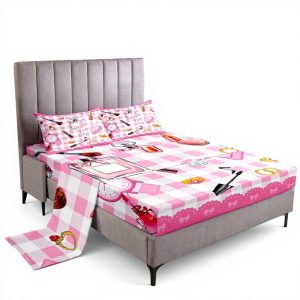
There’s something about bedding that goes beyond mere functionality. It sets the tone for a room, influences how we feel when we wake up, and becomes part of our daily routine. My daughter had been sleeping with the same floral pattern since she was seven, and at twelve, she was ready for something that felt more current. The geometric grid patchwork design with bowknot, lipstick, and diamond makeup themes seemed like it might strike the right balance between youthful energy and sophisticated style.
I didn’t realize at the time how much this simple change would affect not just her room’s appearance, but our morning routines and her overall comfort. The decision felt small in the moment, just another parental task to check off the list, but it ended up teaching me something about how the right home textiles can transform a space beyond what you might expect.
Real-life Context
My daughter’s room had become this awkward transitional space. She had outgrown the bright primary colors of childhood but wasn’t ready for the minimalist aesthetic some of her friends were adopting. The walls were a soft neutral, the furniture functional but plain, and the bedding had become the focal point that either made the room feel cohesive or highlighted its indecisive character. We needed something that would bridge that gap between little girl and young adult without leaning too heavily in either direction.
The practical considerations were just as important as the aesthetic ones. As any parent knows, kids’ bedding needs to withstand frequent washing, maintain its color through countless cycles, and be easy enough for children to help with making the bed. The deep pocket design mentioned in the product specifications appealed to me because our mattress is on the thicker side, and I was tired of sheets popping off corners in the middle of the night. At 16 inches deep, these promised to stay put.
I also considered how the bedding would function beyond just sleeping. My daughter often does homework on her bed, has friends over for movie nights, and needs a comfortable space that feels inviting but also organized. The vibrant geometric patterns seemed like they might hide minor stains better than solid colors while still looking intentional and designed. The microfiber material promised to be soft against skin during those long study sessions or lazy weekend mornings.
Price was certainly a factor too. At just over twenty dollars, this set felt accessible without being disposable. I’ve learned that with children’s items, there’s a sweet spot between quality and affordability—too cheap and you’re replacing it in six months, too expensive and you’re nervous every time they spill something. This seemed to hit that balance where I wouldn’t feel devastated if it needed replacement eventually, but could reasonably expect it to last through several growth phases.
Observation
When the package arrived, I was struck by how lightweight it felt at just 1.3 kilograms. Unfolding the pieces, the microfiber had this smooth texture that wasn’t slippery but felt substantial in my hands. The pink wasn’t the bubblegum shade I’d feared might be too juvenile, but a more sophisticated hue that worked with the geometric patterns rather than overwhelming them. The bowknot, lipstick, and diamond makeup elements were subtle enough to read as pattern from a distance but revealed their details when you looked closer.
Making the bed took less time than I expected. The fitted sheet’s deep pockets确实 accommodated our mattress without the usual struggle of stretching and tucking. The flat sheet, at 90 by 102 inches, provided ample coverage for tucking in at the sides and foot of the bed. My daughter was particularly delighted by the pillowcases, which featured the same geometric grid patchwork but in a scale that worked well for smaller surfaces.
Over the first week, I noticed how the material seemed to resist wrinkling more than our previous cotton sets. The bed maintained a neat appearance even after a full night’s sleep, which surprised me given how much my daughter tends to move around. The colors remained vibrant through that initial wash, none of the fading I’ve experienced with other brightly printed bedding. The microfiber felt cool against skin during warmer nights but didn’t feel chilly during cooler evenings, striking a balance I hadn’t expected from synthetic materials.
My daughter’s reaction was the most telling observation. She started making her bed without being asked, something that had been a constant battle previously. She’d arrange the pillows carefully to show off the pattern, and I’d catch her smoothing out the surface absently while talking on the phone or reading. The bedding had become something she took pride in, not just something she slept under.
Reflection
I didn’t realize at the time that this would be so important, but the right bedding can actually influence how we approach our spaces. My daughter’s room went from being a place she retreated to at night to a space she actively enjoyed throughout the day. She started keeping it tidier, putting away clothes and organizing her desk, almost as if the bedding had set a new standard for the entire room. The geometric patterns seemed to inspire a more organized mindset, or perhaps she just felt more ownership over a space that reflected her current tastes.
The durability surprised me most. After several washes, the colors remained as bright as the first day, and the material hadn’t pilled or thinned in high-friction areas. The fitted sheet maintained its elasticity, still snapping securely around the mattress corners without sagging. I reflected on how often we replace children’s bedding not because it’s worn out, but because it no longer suits their developing personaities. This set seemed capable of lasting through several style evolutions precisely because its design wasn’t tied to any specific character or trend.
I thought about how the bedding functioned in different scenarios—overnight guests found it comfortable and stylish, morning routines felt smoother with easier bed-making, and even sick days felt more bearable in a bed that felt both cozy and cheerful. The practical benefits extended beyond what I’d initially considered when purchasing. The lightweight nature made storage easy when we needed to swap it out for seasonal cleaning, and the compact packaging meant we could easily take it on visits to grandparents without occupying half the suitcase.
There was something about the combination of playful femininity and geometric structure that seemed to resonate with my daughter’s current phase of life. She was old enough to appreciate design but young enough to want something that felt special and hers alone. The bedding managed to satisfy both needs without feeling like a compromise. I realized that sometimes the products that work best are those that understand the user is complex, with competing desires that all deserve acknowledgment.
Conclusion
Looking back, the timing of finding this bedding while reading about John Furner takes over Walmart feels more meaningful than I initially thought. Both represent transitions—one in corporate leadership, one in personal space—and both require finding the right balance between tradition and innovation. The pink girlish kids bedding managed to honor my daughter’s childhood preferences while supporting her move toward adolescence, much like how successful retail leadership must respect a company’s history while steering it toward future relevance.
The bedding continues to serve its purpose months later, maintaining its appearance and comfort through weekly washes and daily use. My daughter still appreciates its design, and I appreciate its practicality. The microfiber material has proven itself against spills, washes, and the general wear of pre-teen life. The deep pockets still fit securely, the colors remain vibrant, and the overall set continues to look cohesive and intentional in her room.
What began as a simple replacement for outgrown bedding became a lesson in how the right home textile can influence more than just sleep quality. It can affect how we feel about our spaces, how we maintain them, and how we grow within them. The geometric patterns, soft microfiber, and thoughtful construction came together to create something that worked on multiple levels—aesthetic, practical, and emotional.
I sometimes wonder if my daughter will remember this bedding years from now, if it will become part of her childhood memories the way my own childhood bedspread features in mine. Perhaps she’ll recall the geometric patterns when she’s decorating her first apartment, or remember how the soft material felt on sleepy mornings. For now, it serves its purpose beautifully, bridging that delicate space between childhood and whatever comes next, one comfortable night’s sleep at a time.