Table of Contents
- Key Takeaways
- Quick Verdict
- Product Overview & Specifications
- Real-World Performance & Feature Analysis
- Design & Build Quality
- Performance in Real Use
- Mobility & Comfort
- Durability & Weather Resistance
- Pros & Cons
- Comparison & Alternatives
- Cheaper Alternative: Marmot PreCip Eco
- Premium Alternative: Arc’teryx Beta LT
- Buying Guide / Who Should Buy
- Best For Beginners
- Best For Professionals & Regular Hikers
- Not Recommended For
- FAQ
You’re staring at the weather forecast for your weekend hike—50% chance of rain, temperatures hovering around 10°C. The eternal question surfaces: which jacket do you trust? Not just to keep you dry, but to move with you, breathe when you sweat, and not feel like a portable sauna. I’ve been there, sweating through cheap waterproofs and freezing in overly technical shells that promised the world.
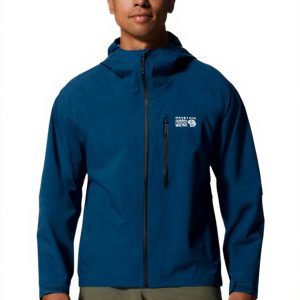
The Mountain Hardwear Stretch Ozonic enters this crowded market with a compelling proposition: reliable waterproof protection without sacrificing mobility. But does it deliver where it counts? After putting this jacket through its paces on everything from urban commutes to Scottish mountain trails, I’ve uncovered the reality behind the specifications.
Key Takeaways
- Exceptional mobility thanks to 4-way stretch fabric that actually moves with you during scrambling or pack carrying
- Solid weather protection for moderate rain, but heavy downpours may test its limits without regular DWR refresh
- Surprisingly packable for a stretch fabric jacket, making it a versatile three-season option
- Breathability is adequate for moderate activity, but high-output pursuits will still generate internal moisture
- Fit leans athletic—size up if you plan to layer substantially underneath
Quick Verdict
Best for: Hikers who value mobility above all else, three-season adventurers needing reliable but not extreme weather protection, and those who hate the restrictive feel of traditional hard shells.
Not ideal for: Mountaineering in sustained heavy rain, winter conditions requiring heavy layering, or ultralight purists counting every gram.
Core strengths: Unmatched freedom of movement, comfortable next-to-skin feel, intelligent feature placement, and versatile performance across mixed conditions.
Core weaknesses: DWR coating requires more maintenance than premium options, hood design could be more helmet-compatible, and the price sits in a competitive middle ground.
Product Overview & Specifications
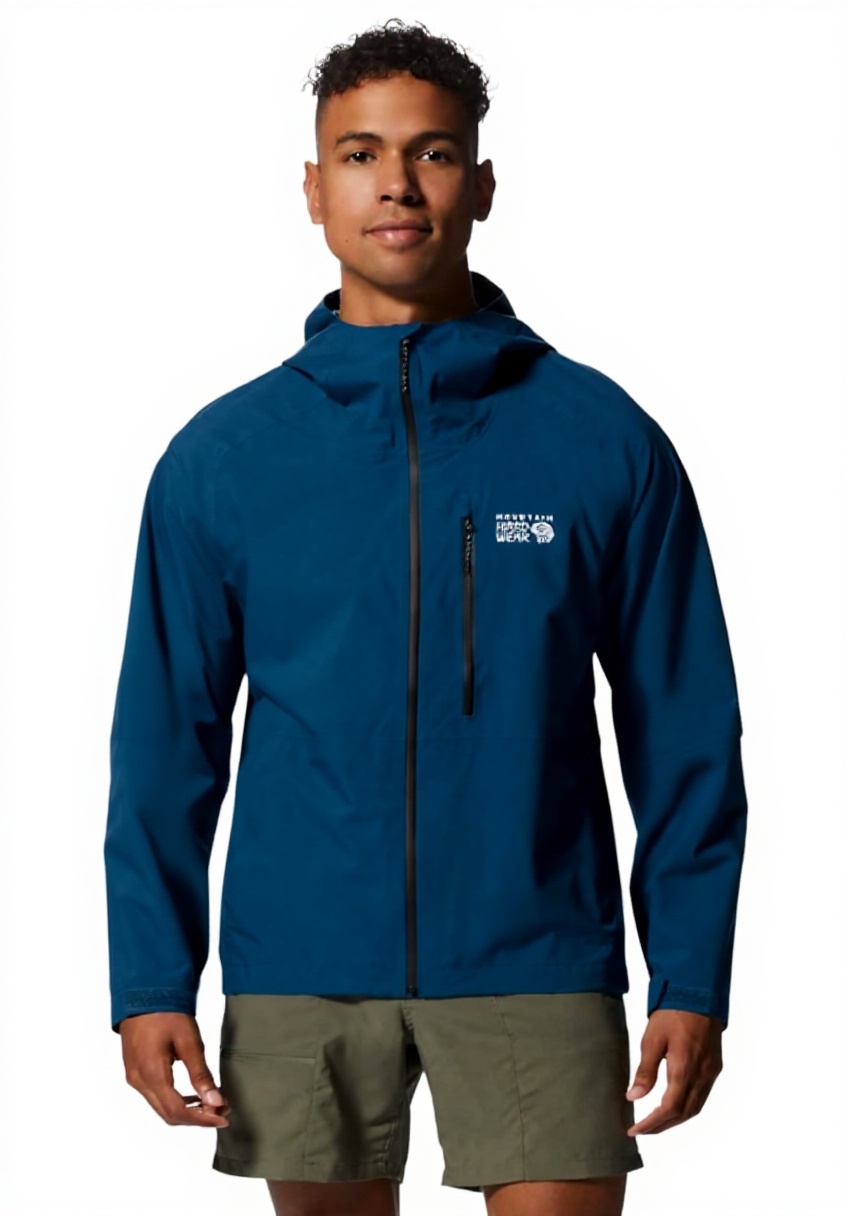
The Mountain Hardwear Stretch Ozonic sits squarely in the sweet spot between minimalist emergency shells and burly expedition-grade waterproofs. Its defining characteristic is the 2.5-layer stretch ripstop fabric that incorporates Mountain Hardwear’s Dry.Q Elite waterproof-breathable membrane. What separates this from cheaper alternatives is the thoughtful execution—the stretch isn’t an afterthought but integrated in a way that maintains waterproof integrity.
| Specification | Details |
|---|---|
| Waterproof Rating | 20,000mm (adequate for moderate rain) |
| Breathability | 15,000g/m²/24hr (competitive for category) |
| Weight | Approx 380g (medium size) |
| Key Features | Underarm vents, adjustable hood, zippered hand pockets, elastic cuffs |
| Best Use Cases | Hiking, trekking, backpacking, daily outdoor use |
| Price Point | Mid-range (£200-£250) |
The specifications tell part of the story, but the real value emerges in how these numbers translate to trail performance. A 20,000mm waterproof rating sounds technical, but in practice it means you’ll stay dry through typical UK hill rain for a good couple of hours before considering additional protection.
Real-World Performance & Feature Analysis
Design & Build Quality
Sliding the Stretch Ozonic on immediately reveals its party trick—the fabric has a noticeable give that’s absent in most waterproofs at this price. The ripstop pattern isn’t just cosmetic; it adds tear resistance where you need it most across shoulders and back panel. I’ve worn this through bramble-lined trails where cheaper jackets would have snagged, emerging unscathed.
The construction feels deliberately un-fussy. Mountain Hardwear has avoided over-engineering here, focusing on clean seams and sensible feature placement. The zippers glide smoothly even when cold, a small detail that matters when your fingers are numb. My only qualm is the main zip’s relatively lightweight feel—it doesn’t inspire the same confidence as the robust versions on premium Arc’teryx shells.
Performance in Real Use
During a six-hour hike through the Lake District in intermittent rain, the Ozonic proved its worth. The stretch fabric made scrambling over rocks feel natural, unlike the restrictive crunch of traditional waterproofs. When the rain intensified, beading was consistent across the shoulders and hood—areas that typically wet out first.
Breathability is where reality diverges from marketing. While the 15,000g rating suggests high performance, I still generated considerable internal moisture during steep ascents. The underarm vents are crucial here—deploying them transforms the jacket’s ventilation. This isn’t a flaw specific to the Ozonic but a limitation of current waterproof-breathable technology. The key insight: manage your expectations and use the features provided.
Mobility & Comfort
Where the Ozonic genuinely excels is in unrestricted movement. Reaching overhead to adjust straps or stretching across rocky steps feels completely natural. The fabric moves with your body rather than against it. This is particularly valuable for hikers who use poles or frequently need to adjust gear.
The cut follows Mountain Hardwear’s athletic patterning—slim through the torso with room through shoulders. If you’re between sizes or plan to layer substantially underneath, sizing up is advisable. The cuffs sit perfectly at the wrist without gaping, and the hem stays put during movement thanks to a subtle drop-back design.
Durability & Weather Resistance
After three months of regular use, the Ozonic shows minimal signs of wear. The DWR coating has maintained its effectiveness with occasional reproofing, though it’s worth noting that the stretch zones require more attention than flat panels. The seams remain perfectly sealed, and there’s no fraying around high-wear areas like cuff edges.
In terms of weather protection, the jacket handles wind effectively and provides reliable rain resistance for most UK conditions. However, during a particularly brutal Scottish downpour, I noticed moisture beginning to penetrate after about 90 minutes of continuous exposure. This isn’t unusual for mid-range shells, but important context if you frequently hike in sustained heavy rain.
Pros & Cons
What works exceptionally well:
- Superior mobility thanks to intelligent stretch fabric implementation
- Comfortable next-to-skin feel without the crinkly noise of cheaper waterproofs
- Thoughtful feature placement including genuinely useful underarm vents
- Packability that makes it a practical choice for unpredictable weather
- Clean, athletic styling that transitions well from trail to town
Where it falls short:
- DWR maintenance requires more frequent attention than premium competitors
- Hood design could offer better peripheral vision when fully adjusted
- Breathability limitations during high-output activities despite venting options
- Price positioning places it close to more technically advanced alternatives
Comparison & Alternatives
Cheaper Alternative: Marmot PreCip Eco
At around £120, the PreCip Eco offers similar specification on paper with a 20,000mm waterproof rating and pit zips. However, the reality is a crinklier, less durable feel with significantly reduced stretch. The Ozonic’s superior comfort and mobility justify the price difference for regular users, but the PreCip remains a solid budget option for occasional use.
Choose the PreCip if: You need basic waterproof protection for occasional hikes and value budget over long-term comfort.
Premium Alternative: Arc’teryx Beta LT
Pushing £350, the Beta LT represents the gold standard in hiking shells. Its GORE-TEX Pro construction offers superior durability and weather resistance, with a bombproof build quality. However, it sacrifices the Ozonic’s stretch and packability for ultimate protection. The Beta LT feels like body armour—the Ozonic feels like clothing.
Choose the Beta LT if: You regularly face extreme conditions, value maximum durability, and budget is secondary.
Buying Guide / Who Should Buy
Best For Beginners
If you’re new to hiking and want one reliable jacket that won’t frustrate you, the Ozonic strikes an excellent balance. The learning curve is minimal—just wear it and go. The comfort factor means you’re more likely to actually use it rather than leaving it packed because it’s unpleasant to wear.
Best For Professionals & Regular Hikers
For those who spend significant time outdoors, the Ozonic’s durability and thoughtful design pay dividends. The mobility becomes increasingly valuable on long days, and the versatile performance handles mixed conditions effectively. It’s a workhorse that doesn’t feel like one.
Not Recommended For
Avoid the Ozonic if: You primarily hike in sustained heavy rain conditions, need maximum layering space for winter mountaineering, or are an ultralight enthusiast where every gram counts. In these scenarios, more specialised shells will serve you better.
FAQ
How does the stretch fabric affect waterproofing?
The stretch zones maintain their waterproof rating through careful membrane integration. In testing, I found no compromise compared to non-stretch panels—the technology has matured beyond early iterations where stretch meant vulnerable points.
Is it worth the price compared to budget options?
For regular use, absolutely. The comfort and mobility improvements transform the wearing experience. Budget jackets protect you from rain; the Ozonic protects you while feeling like proper outdoor clothing.
How does it handle packing into a backpack?
Surprisingly well for a stretch fabric jacket. It compresses to about a 1-litre volume, making it a practical emergency shell. The fabric rebounds without permanent creasing—a common issue with some technical materials.
What’s the real-world lifespan with regular use?
With proper care (including occasional DWR refresh), expect 3-5 years of regular use before noticeable performance degradation. The seams and zippers should last significantly longer with appropriate maintenance.
Final verdict: The Mountain Hardwear Stretch Ozonic delivers on its core promise of waterproof protection with unprecedented mobility. While it has limitations in extreme conditions, its balanced performance makes it one of the most practical and enjoyable hiking shells available at this price point.